Tattoo Heritage field note: This guide is published for readers who want the operational details behind professional tattoo work. Product names and equipment categories are discussed for education; they are not paid rankings.
Tattoo Ink: A Quick Guide
Tattoo ink is a suspension, not a single substance — pigment carried in a liquid base. What is in that suspension, how it was manufactured, and how it has been stored all affect both the tattoo’s outcome and the client’s safety. This guide covers pigment and carrier basics, labeling and lot tracking, storage and disposal, counterfeit warning signs, and current regulatory guidance.
Pigment and Carrier Basics
Tattoo Pigment is the solid colorant that stays in the skin — it may be organic, inorganic (mineral-based), or carbon-based, depending on the color and manufacturer. The Ink Carrier Solution is the liquid base that suspends the pigment and allows it to be deposited into skin; common carrier ingredients include purified water, ethanol, glycerin, and witch hazel blends. The carrier evaporates or is absorbed over time; the pigment is what remains as the visible tattoo.
Reading Ink Labels and Lot Numbers
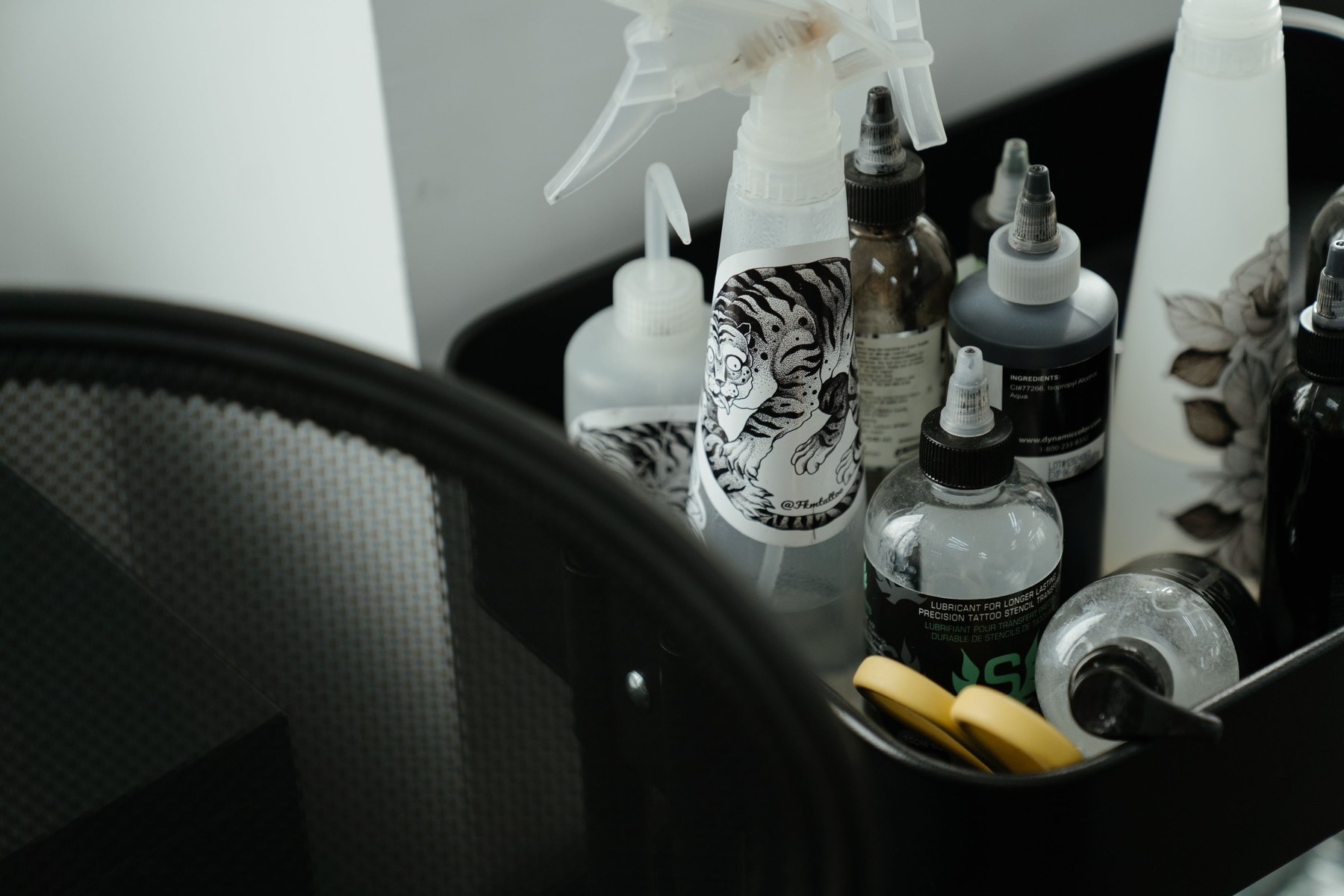
A legitimate ink label should show the manufacturer name, an ingredient or pigment list, a lot or batch number, a manufacture or fill date, and an expiration date. The lot number matters beyond bookkeeping: if a manufacturer or the FDA issues a contamination notice, it is almost always tied to specific lot numbers, not an entire product line. Studios that log which lot number was used on which client can respond quickly and specifically if a recall notice is issued.
Expiration and Storage
Follow the ink manufacturer’s storage and after-opening instructions. Keep the label and lot number with the bottle, respect its stated expiry, and ask the manufacturer about any product whose seal, storage history, or condition is uncertain. A bottle’s appearance alone does not establish microbiological safety.
Contamination Risks and Sealed Containers
FDA reported microbial contamination in sealed tattoo ink bottles when it issued its October 2024 manufacturing guidance. Packaging and a factory seal do not guarantee sterility. Check current safety notices, retain lot details, and follow manufacturer instructions and the requirements of the relevant health authority. This overview is not a tattooing or sterilization procedure.
Counterfeit Warning Signs
Counterfeit ink is a real market problem, particularly for popular brand names sold far below the manufacturer’s typical price. Warning signs include: packaging or labels with inconsistent fonts or spelling errors, missing lot numbers or expiration dates, a seller who cannot say who their distributor is, and pricing dramatically below the same product on the manufacturer’s own site. Buying directly from a manufacturer or an authorized distributor is the most reliable way to avoid counterfeit product.
Color-Set Purchasing
When purchasing a color set, check that every bottle in the set carries its own label, lot number, and expiration date — not just the outer box. Buy set sizes that match your actual usage pace; a large discounted set that expires before you use half of it is not a savings.
Black-and-Gray Considerations
Black-and-gray shading may involve gray-wash products or diluents. Follow the specific ink manufacturer’s instructions and use only products intended and documented for the proposed use. This article does not provide dilution recipes or substitute for professional training.
Mixing Boundaries
Do not infer that two products are compatible from their color, brand, or ingredient names. Ask the manufacturer for the instructions and compatibility information for the exact products. Avoid improvised additives and follow local practice requirements.
Disposal
Waste classifications and disposal requirements vary by jurisdiction and material. Confirm the instructions for ink, contaminated containers, and sharps separately with the local authority and the studio’s licensed waste provider. Do not assume they all share one legal waste category.
Regulatory Considerations
Tattoo inks are regulated by the U.S. Food and Drug Administration as cosmetics, while the practice of tattooing itself is regulated locally. In the Las Vegas area, that means the Southern Nevada Health District sets the sanitation rules studios must follow, in addition to whatever the ink manufacturer documents.
Common Purchasing Mistakes
- Buying from an unverified third-party seller instead of the manufacturer or an authorized distributor.
- Ignoring lot numbers, making a recall notice impossible to act on quickly.
- Over-buying a color set faster than it can be used before expiration.
- Assuming a “sealed” bottle from an unfamiliar reseller has not been opened and refilled.
How to Evaluate Ink Options
Evaluate ink against a documented checklist rather than marketing claims: a complete label (manufacturer, ingredients, lot number, expiration date), a factory-sealed container, a traceable distributor, and no unresolved contamination notices for that lot. Cross-check any lot number against current FDA safety communications before use.
Frequently Asked Questions
Is tattoo ink FDA-approved? FDA treats intradermal tattoo inks as cosmetics and reports that no color additive is approved for injection into skin. Read the agency’s fact sheet; a claim that an ink is FDA-approved should not be accepted as evidence of safety.
Can old ink just be diluted and used? Adding liquid does not establish that an old product is suitable for use. Follow the manufacturer’s expiry and storage instructions and seek product-specific guidance rather than attempting to restore an uncertain bottle.
Why do lot numbers matter to a client? Lot records help a studio trace a product and identify clients to notify when a manufacturer or regulator issues a safety notice.
Sources and Further Reading
This guide references FDA tattoo safety guidance, FDA’s final guidance on insanitary conditions in tattoo ink manufacturing, an FDA consumer safety advisory on a specific contaminated ink lot, and local sanitation regulations from the Southern Nevada Health District. These are cited for documented regulatory and safety information only.
Related Equipment Guides
Pigment goes into the skin through the needle configuration covered in our Tattoo Needles & Cartridges: Types, Configurations, and a Buyer’s Guide. Machine setup for how ink is actually deposited is covered in Tattoo Machines: Understanding Coil vs Rotary, Artists Guide.
Replacement photograph: cottonbro studio / Pexels. Representative image.
Primary safety and business resources
- FDA tattoo and permanent-makeup fact sheet
- OSHA bloodborne pathogens resources
- CDC/NIOSH sharps-injury resources
Frequently asked questions
Does equipment replace training?
No. Tools support a trained professional’s process; they do not replace infection-control training, supervised practice, or local licensing requirements.
Should every studio buy the same setup?
No. The right setup depends on workflow, cleaning protocols, service mix, artist ergonomics, and the rules enforced by the local health authority.