A tattoo can survive in the archive as a few words on a form. In some U.S. seamen’s protection certificate applications, a clerk described a tattoo alongside other marks that could distinguish one sailor from another. Reading those entries with their original purpose in mind helps explain both what the archive preserves and what a later reader still has to find out.
Why a clerk recorded a tattoo
The documents identified seamen and could help establish their citizenship. The federal government began issuing protection certificates in the 1790s in response to impressment, the practice of taking sailors into naval service. When a mariner applied, the paperwork could record his age, birthplace and physical description. The National Archives’ account of the Philadelphia applications explains that tattoos sometimes appeared among the identifying marks, alongside scars and birthmarks.
The clerk’s purpose was identification. A physical description might tell us where a mark was, or how someone described it in one encounter. The form could omit the tattooer, date, colors, or reasons for choosing the design. Silence on any of those points is a limit of the record. It leaves room to look for corroboration in another source.
Distinguish the record you have from the record you want
An application, an index entry, and the certificate itself are different documents. A summary can help you locate a sailor even when the underlying form does not survive. The National Archives’ walkthrough of a surviving certificate shows the kinds of descriptive fields to look for. Its discussion of the Philadelphia holdings also gives a collection identifier that can help a researcher trace the record series.
Start your research note with the sailor’s name as spelled, the port, the date if present, and the catalog identifier. Keep the clerk’s wording separate from your description of it. If the image is hard to read, mark the word as uncertain and preserve the scan reference so another reader can check your interpretation.
Keep motif and meaning apart
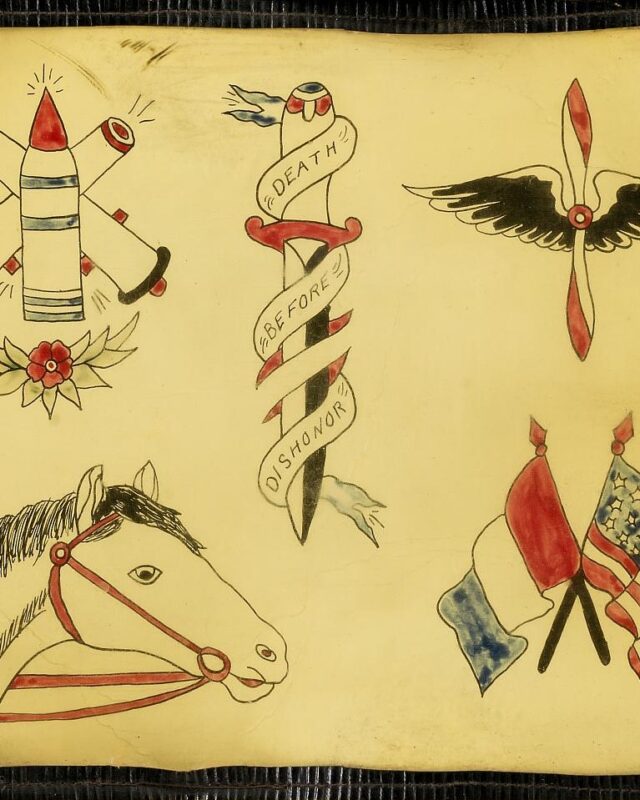
A record of a recognizable motif is evidence that someone recorded it. To connect it with a voyage, an occupation, or a belief, look for evidence about that individual. The same approach works for a different kind of historical object. Our guide to reading a 1940s tattoo flash sheet explains why a surviving design and the identity of a wearer call for different lines of evidence.
Frequently asked questions
Did every application describe a tattoo?
No. The National Archives describes tattoos as one kind of identifying mark that may appear. A blank or missing field leaves the question open.
Where should a citation begin?
Record the archive, series or collection identifier, item or page, and the form type. Add the port and date when recorded. A reader should be able to find the exact image or entry you used.
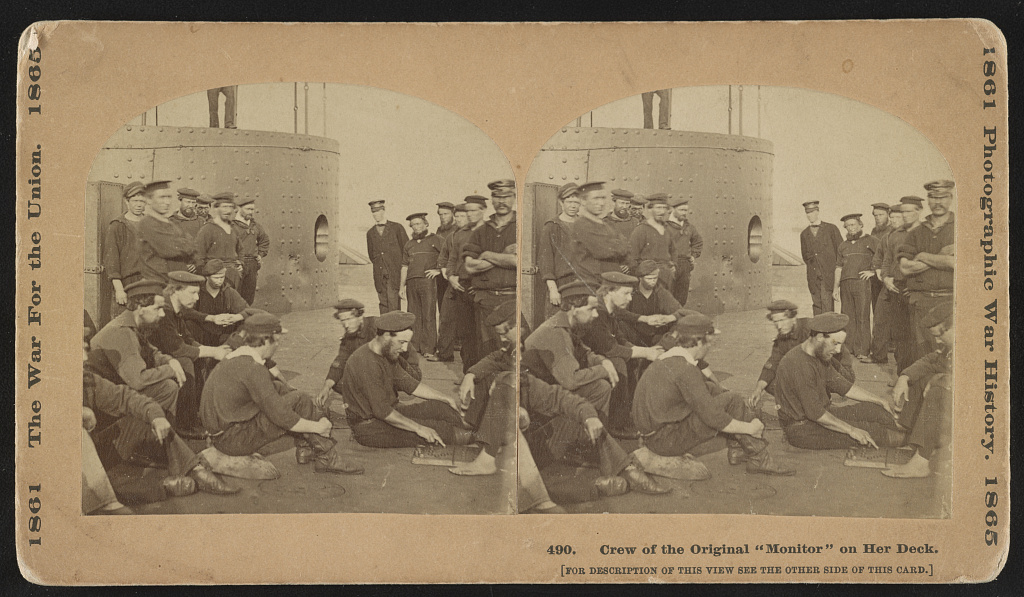
Archival photograph: James F. Gibson, crew of the USS Monitor on deck, 1862. Library of Congress, LC-DIG-stereo-1s04664, no known restrictions on publication. The photograph supplies maritime context. The certificate records discussed above concern applicants for U.S. seamen’s protection.